
Zen Color - Color By Number
Oakever GamesCasual
4.61.48K Reviews
- Version
- 2.2.7
- Installs
- 1.00M
- Age Rating
- Everyone
Screenshots

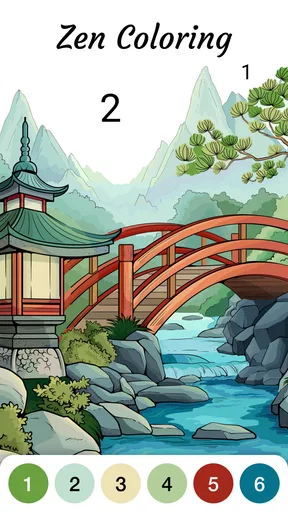
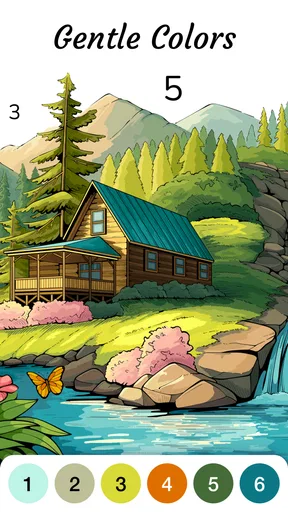

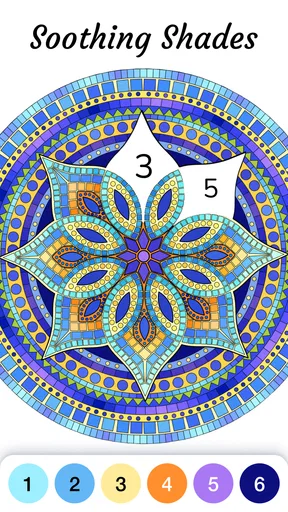
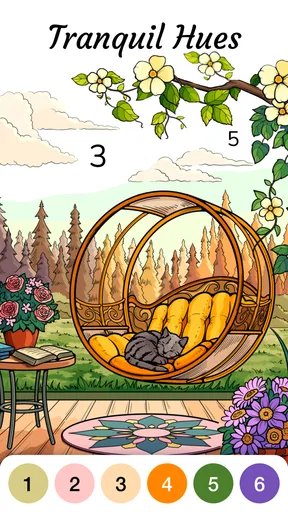
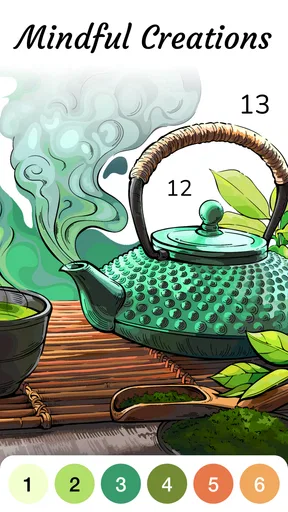
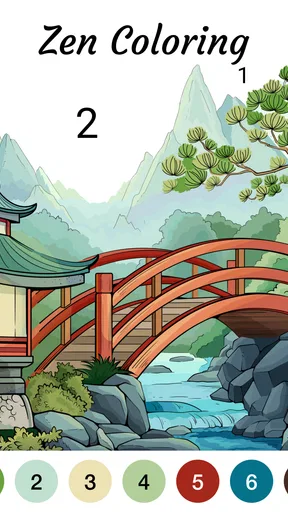
Our Review of Zen Color - Color By Number
 Analysis by Appyee
I opened Zen Color - Color By Number expecting a simple way to fill a few spare minutes, and that is exactly where this casual game makes the strongest impression. It gets to the pleasant part quickly: choose a picture, follow the numbered color areas, and watch an unfinished image become complete. There is no complicated setup to learn, and the basic idea is easy enough for anyone in the Everyone age group to understand.
That simplicity is not a weakness here. In my experience, the appeal comes from how little mental effort is needed before the activity feels rewarding. I can play when I am waiting for an appointment, winding down after work, or taking a short break from a more demanding game. It is free to start, developed by Oakever Games, and its audience has already grown beyond a million installs, with an average rating of 4.6 from roughly 18 thousand ratings. Those figures suggest that its quiet, accessible format has found a broad audience, but the real question is whether it remains enjoyable after the first few pictures.
Why the first few minutes work so well
The opening experience is built around immediate recognition. A coloring-by-number game does not ask me to memorize rules, manage resources, or understand a story before I can begin. The numbered sections tell me what to do, while the gradual change from a mostly unfinished drawing to a completed image supplies the motivation to continue.
I especially like this format for short sessions because it removes the usual friction found in casual games. There is no need to remember where I left off in a complicated progression system. I can start with a clear task and finish a small piece of it without preparing for a long play session. That makes the game feel more like a calming activity than a conventional challenge.
The Zen-inspired presentation also sets the right expectation. This is not a game I would choose when I want competition, fast reactions, or a demanding puzzle. The pleasure is slower and more visual. I am paying attention to small areas, selecting matching colors, and noticing the composition take shape. For someone who enjoys coloring but does not want to handle physical pencils, paper, or cleanup, that is a convincing reason to try it.
One useful habit is to treat each image as a stopping point rather than assuming I need to complete everything in one sitting. If I have only a few minutes, I can work through a cluster of areas and leave the rest for later. That approach keeps the game relaxing. Trying to rush toward completion can turn a gentle activity into a chore, especially when the remaining sections are small or visually similar.
A rhythm designed for spare moments
The strongest part of the experience is its session rhythm. I can enter, make visible progress almost immediately, and stop without feeling that I have wasted a long loading period or abandoned an important match. That matters more to me than a large collection of elaborate systems in a game intended for casual use.
A realistic example is an evening when I have finished my main tasks but do not want to start a television episode or a competitive game. I can spend a short while coloring one portion of an image, notice the picture becoming clearer, and put the phone down when I feel ready. The activity gives me something to focus on without demanding the level of attention that a strategy or action game would require.
It also works during fragmented daytime breaks. If I am waiting for transportation or sitting in a queue, the numbered format gives me an obvious next action. I do not have to reconstruct a complicated plan after an interruption. That clarity is one of the game’s most practical strengths, and it is more important than it may sound: casual games often lose their appeal when a short break is spent navigating menus instead of playing.
There is a trade-off, though. The same guided structure that makes the game approachable can make it feel passive. I am following the image’s instructions rather than making many artistic decisions. Players who want to select their own palette, draw freely, or experiment with composition may find the experience too controlled. A traditional coloring app or a blank digital canvas would be better for that kind of creativity.
Stopping and returning without losing the mood
Interruption tolerance is where this style of game earns its place on my phone. Coloring by number naturally divides progress into small actions, so I do not feel pressured to protect a long uninterrupted run. I can stop after completing a few areas and return later with a clear visual reminder of what remains.
That makes it suitable for people who share their attention with other responsibilities. I would recommend it to a parent waiting for a child, a commuter with unpredictable travel time, or anyone who wants a low-pressure activity beside a more demanding routine. The best casual games respect the fact that the player may need to leave suddenly, and this one’s basic structure supports that use better than games built around timed rounds.
My advice is to avoid treating every unfinished image as an obligation. The game is most enjoyable when I return because I want a quiet moment, not because I feel compelled to clear a backlog. If I notice myself tapping mechanically just to remove the last few areas, that is a good sign to stop and come back another day. The visual completion is satisfying, but it should not become another task on a busy list.
The free entry point also lowers the risk of trying it. However, in-app purchases are listed at $9.99 per item, so I would be careful about spending simply to maintain momentum. For me, the core value is the calm, repeatable coloring loop. Anyone considering a purchase should first decide whether it adds meaningful convenience or simply removes a temporary obstacle. A free game can still become expensive if the player makes small decisions impulsively over many sessions.
What keeps the coloring loop interesting
Repetition is both the game’s foundation and its main limitation. The basic action remains familiar: identify a number, choose the corresponding color, and fill the matching space. That consistency is comforting when I want predictable relaxation, but it does not provide the same variety as a game with changing rules, opponents, or puzzles.
The visual reveal helps postpone that repetition. Even when the interaction is similar, the unfinished picture gives me a reason to continue because I want to see the final result. I find that the anticipation works best when I focus on the image as a small project rather than judging every tap as gameplay depth. The satisfaction comes from completion and transformation, not from mastering a difficult mechanic.
There is also a subtle difference between repetition that relaxes and repetition that numbs. Early in a session, the numbered areas give my attention a useful anchor. Later, if I am no longer noticing the artwork and am only searching for the next matching section, the activity can lose its effect. This is why I prefer shorter visits. The game is strongest as a reset button, not necessarily as an all-evening commitment.
Compared with match-three games, it offers less urgency and fewer moments of surprise. Compared with word games, it does not exercise language or problem-solving in the same direct way. Compared with freehand coloring tools, it offers less personal expression. Its advantage is the middle ground: more focused than passive scrolling, easier than a puzzle, and more structured than an empty canvas.
Who will enjoy it, and who should skip it
I think Zen Color is a good fit for players who want a peaceful screen activity with an obvious beginning and end. It suits beginners, people who enjoy visual organization, and anyone who likes the feeling of completing small sections. The Everyone rating also makes its general tone approachable for a wide audience, though personal preferences still matter more than the label.
I would also suggest it to someone trying to replace aimless phone checking with a more deliberate habit. Opening a coloring session gives me a simple reason to look at the screen, and the progress is visible rather than disappearing into an endless feed. It is not a substitute for every kind of relaxation, but it can be a useful choice when I want light concentration without pressure.
I would skip it if I need deep replay value, competitive goals, or a strong sense of discovery. Players who quickly become bored by repeated tap-and-fill actions will probably reach that limit sooner than others. The same applies to artists who want full control over brush size, color mixing, layering, or original drawing. This is guided coloring, not a professional art tool and not a demanding puzzle game.
It may also be the wrong choice if I want every short session to feel different. Its strength is reliable calm, so the experience does not constantly reinvent itself. Someone who prefers surprise and escalating difficulty should look toward a more dynamic casual game instead. I see this title as a companion for a particular mood, not as a universal replacement for other mobile entertainment.
Practical ways to get more from each session
My first tip is to choose a natural stopping point before starting. I might decide to work until I finish one recognizable part of the image, then pause even if more sections remain. This keeps the session contained and makes returning feel inviting rather than unfinished in a frustrating way.
My second tip is to use the visual change as the measure of progress. Instead of counting taps, I look for how the composition is developing. That small shift makes the activity feel more like coloring and less like clearing a checklist. It is especially useful when a picture contains many tiny areas that would otherwise make progress feel slow.
My third tip is to reserve it for moments when I genuinely want low stimulation. If I am restless and looking for excitement, the game may feel too quiet. If I am mentally tired but still want to do something with my hands, it becomes much more effective. Matching the game to the right mood makes a bigger difference here than trying to force enjoyment at any time of day.
I would also keep expectations realistic around replay. The game can be replayable in the sense that there are more images to complete and the act of coloring remains pleasant, but it is not replayable like a branching adventure or a competitive arcade title. Its return value comes from dependable relaxation and the appeal of seeing another picture emerge. That is enough for the right player, but not for everyone.
Device and purchase considerations
The current version is 2.2.7, and it supports Android 7.0 or later. That makes compatibility worth checking before installing, particularly if I am using an older device. On a suitable phone, the most important practical consideration is not performance ambition but comfort: a screen that makes small numbered sections easy to see will make the experience more pleasant than a cramped display.
Because the game is free, I can evaluate its basic rhythm without committing money at the start. I would spend time deciding whether I genuinely enjoy the repeated coloring loop before considering any optional item priced at $9.99. The purchase price is significant enough that it should be treated as a deliberate choice, not an automatic extension of the free trial.
The developer, Oakever Games, has positioned the title clearly as a casual coloring experience rather than a feature-heavy creative suite. That clarity helps me judge it fairly. I am not looking for advanced drawing controls or a complex progression system; I am looking for a calm activity that starts quickly and survives interruptions. On those terms, the game makes sense.
My casual verdict
After spending time with it, I see Zen Color - Color By Number as a focused relaxation game rather than a game I would play for challenge. Its best qualities are immediate accessibility, a gentle session rhythm, and progress that remains easy to understand even when I leave and return later. The coloring-by-number format gives my attention something concrete to do without demanding much mental energy.
The limitations are equally clear. The interaction can become repetitive, artistic freedom is restricted by the numbered design, and players seeking competition or complex goals will likely outgrow it. The in-app purchase structure also deserves a measured approach, especially because the game’s appeal depends more on the calming routine than on advanced mechanics.
My recommendation is simple: try it when you want a short, interruption-friendly break and enjoy watching an image gradually come together. I would not make it my only casual game, but I would keep it available for those moments when a match-three board feels too urgent and a drawing app feels too open-ended. Its real strength is not endless variety; it is the ability to make a small amount of free time feel settled and complete.
Verdict
Strengths of Zen Color - Color By Number
- Relaxing gameplay suitable for short breaks
- Large variety of coloring pages and themes
- Simple controls are easy for all ages
- Offline coloring is available for many pictures
- Completed artwork can be saved or shared easily
Limitations of Zen Color - Color By Number
- Some premium pictures require a subscription or payment
- Frequent ads may interrupt the coloring experience
- Hints and special tools can consume limited resources
- Detailed images may take considerable time to finish
- Limited creative freedom compared with freehand coloring apps
Other Releases by Oakever Games
View All


Similar Picks in This Category
View All
My Talking Angela
Outfit7 Limited4.2

My Talking Tom
Outfit7 Limited4.3

Pou
Zakeh4.2

My Talking Tom 2: Pet Game
Outfit7 Limited4.3

Candy Crush Saga
King4.6

Bridge Race
Supersonic Studios LTD4.1
Frequently Asked Questions
What is Zen Color - Color By Number?
Zen Color - Color By Number is a relaxing digital coloring app built around numbered illustrations. Each picture is divided into small sections, and you fill them by selecting the matching color. The app includes a broad range of themes, such as animals, flowers, landscapes, mandalas, and artistic designs. It is designed for casual play, stress relief, and creative entertainment rather than competitive gaming.
How does the coloring system work?
After choosing an image, the app displays a color palette with numbered options that correspond to areas in the artwork. Tapping a color highlights the sections that need to be completed, making it easy to follow the design even if you have no drawing experience. You can zoom in for tiny details, move around the canvas, and use helpful tools when locating difficult or hidden areas.
Is Zen Color - Color By Number free to download and use?
The app can generally be downloaded for free, but it may include advertising, optional purchases, or subscription-based features depending on the version and platform. Some illustrations, tools, or daily content may be available without payment, while premium options can provide additional artwork or a more uninterrupted experience. Before confirming a purchase, review the current store listing and subscription terms carefully.
Does the app require an internet connection?
An internet connection may be needed for downloading new coloring pages, synchronizing progress, displaying advertisements, and accessing certain online features. Some previously loaded images may remain available for offline coloring, but offline functionality can vary by device and app version. If you plan to use Zen Color while traveling, open the desired artwork beforehand and check whether it remains accessible without a connection.
Is Zen Color - Color By Number suitable for children?
Zen Color can be approachable for children because its numbered system provides clear guidance and does not require advanced artistic skills. However, parents should check the recommended age rating, advertising settings, in-app purchase options, and privacy information before allowing independent use. The detailed designs may suit older children and adults better, while younger users could need help with navigation and purchase restrictions.
Play our best games!


